
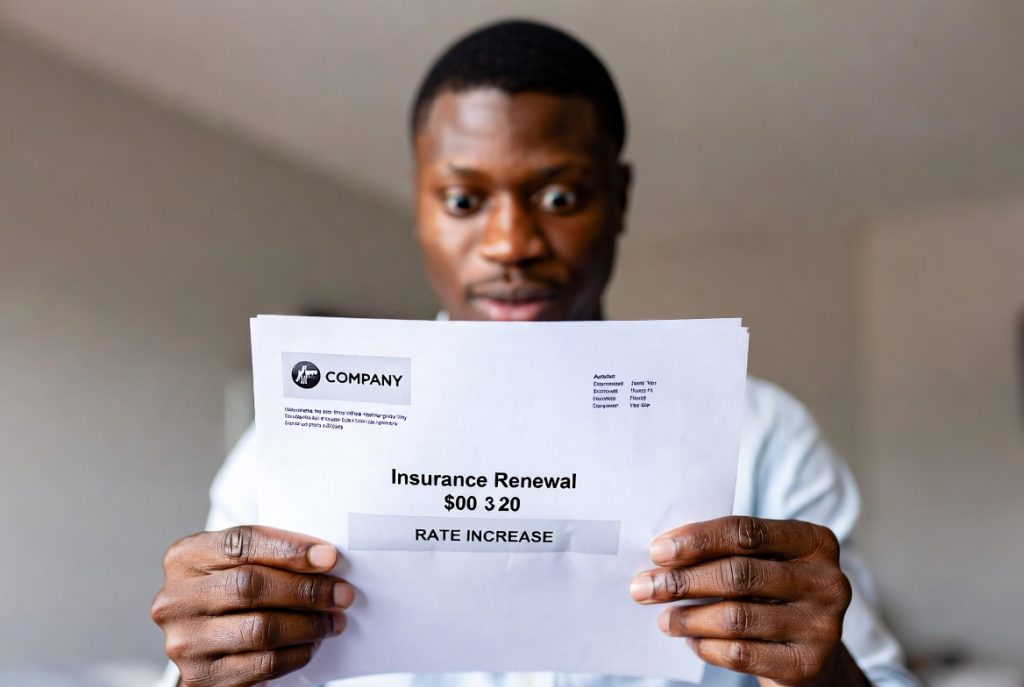
Rate increases without a single ticket or accident are normal — and they have predictable causes. Knowing which one applies to you is the first step in pushing back, or at least making sure you’re not overpaying for something you can’t change.
The Seven Most Common Silent Rate Drivers
- Carrier-wide rate filings. Insurance companies file rate increases with state regulators every year based on rising claim costs — more expensive repairs, higher medical bills, more severe weather events. These increases apply to everyone in a state, regardless of your personal driving record. Your carrier got approved for a 7% increase; you got a 7% increase. Nothing you did.
- Zip-code re-rating. Carriers re-evaluate risk by territory regularly. If accident, theft, or weather claim frequency went up in your zip code, your rate adjusts — even if you had zero claims. Moving to a different zip code can cut your rate or raise it significantly.
- Credit score shifts. In most states, insurers use a credit-based insurance score to help set rates. It’s not identical to your FICO score, but it tracks similar factors. A drop in credit score — a new collection, a missed payment, higher credit utilization — can trigger a rate increase at renewal even with no driving incidents.
- Household roster changes. Adding a driver — a teenager, a new roommate who uses the car, a spouse — affects the rate. Sometimes carriers discover an unlisted household member during a routine audit and rate you for them retroactively.
- Loss of a discount. Discounts expire. A good-student discount runs out when the student turns 25 or leaves school. A telematics discount from a driving-monitor app can expire if you don’t re-enroll. A multi-car discount disappears when one car leaves the policy. The premium didn’t go up — a discount stopped applying.
- Renewal creep. Some carriers incrementally increase premiums at each renewal regardless of other factors, betting that long-term customers won’t notice or won’t shop. This is legal and common. The antidote is shopping.
- A claim you didn’t file. If someone hit your parked car and the other driver’s insurer paid a claim, that incident can still appear on your CLUE report — a database of insurance claims tied to your address and vehicle — and influence your rate. Even weather claims on a previous home can show up.
How to Find Out Which One Applies to You
Start with a simple phone call to your carrier. Ask: “Why did my rate increase at this renewal?” They’re required to provide a reason. Common answers include “rate adjustment in your territory,” “credit score change,” or “policy changes.”
If credit is mentioned, you can request a free copy of your CLUE report at LexisNexis.com and your credit-based insurance score (often available through your insurer or a monitoring service). If there’s an error on your CLUE report — a claim that wasn’t yours, wrong vehicle, wrong address — you can dispute it.
Levers You Can Pull This Week
- Ask about discounts you might have missed: paperless billing, autopay, bundling renters or homeowners, completing a defensive driving course, or a telematics/usage-based program.
- Raise your deductible if you have an emergency fund that could cover it. Moving from a $250 to a $500 deductible often saves 10–15% on comp and collision.
- Remove comp and collision on a low-value vehicle you own outright.
- Correct any errors on your CLUE report or credit file — disputing inaccuracies is free and can take 30–60 days to process.
When It’s Time to Shop
If your rate increased more than 15% without a new violation or claim, shop immediately. Don’t wait for renewal. Most policies allow cancellation mid-term, and you’ll receive a prorated refund of unused premium.
Get at least three quotes, keeping coverage levels identical so you’re comparing the same thing. Rates from different carriers for the same coverage can vary 30–50% or more — that variation doesn’t reflect quality, just different pricing models.
Quick Reference
- Carrier-wide increases: check your state’s insurance commissioner website for approved rate filings
- CLUE report: free annually at LexisNexis.com — request it if you suspect a claim error
- Credit-based insurance score: different from FICO but driven by similar factors
- Shopping mid-policy is legal and common — you get a refund for unused premium
Next step: Call your carrier and ask for the specific reason code behind this renewal’s increase — then get at least two competing quotes before your next payment is due. Get a same-day quote that works for your situation →
Last modified: January 25, 2026
About the Author: Casey Rivera