
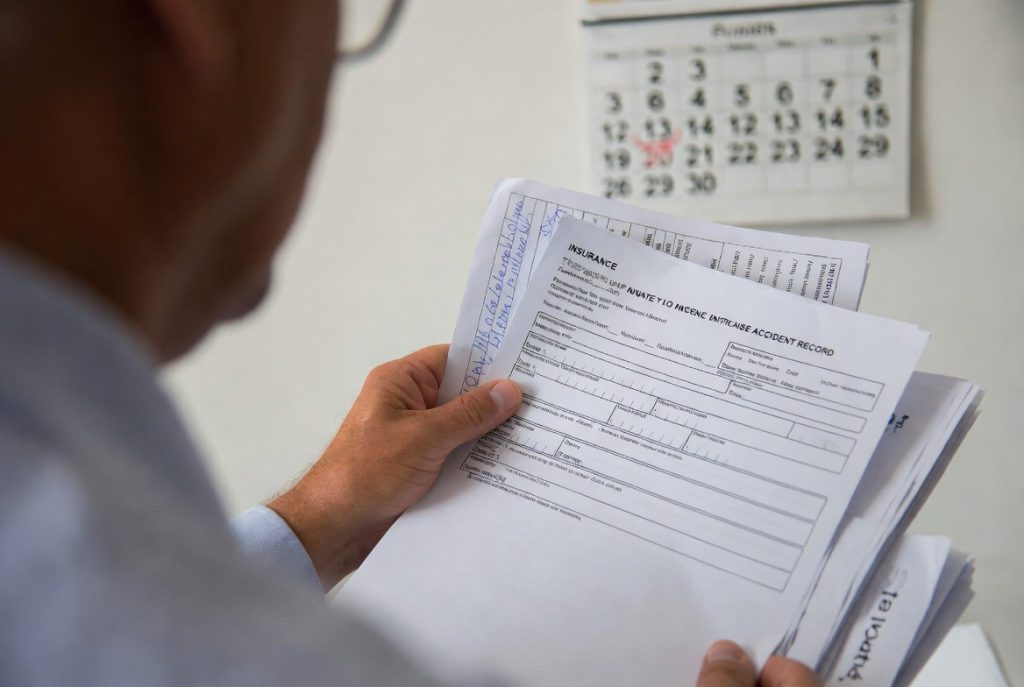
The accident-on-record window varies by carrier more than most people realize. Two carriers can give you wildly different rates for the same accident three years out. Shopping at the right time — and with the right carriers — can save you significantly.
The Three-Year Industry Standard
Most auto insurance carriers use a three-year look-back window for at-fault accidents. Within that window, the accident raises your rate. Outside it, carriers typically ignore it for pricing purposes.
“At-fault” is the operative word. A not-at-fault accident (someone hit you, their insurance paid) generally has a smaller rate impact — and at many carriers, no impact at all after the first year. Always ask how a carrier treats not-at-fault claims before you assume they’re free.
The three-year clock usually starts on the date of the accident, not the date of the claim. If you reported a fender-bender three months after it happened, the clock ran from the incident date — meaning you’re already three months into your wait.
Carriers That Look Back Five Years
Some major carriers extend their accident look-back window to five years for pricing purposes:
- Allstate and some of its subsidiaries use five years for serious at-fault accidents.
- Travelers applies longer look-backs for accidents involving injuries or significant property damage.
- State Farm generally uses three years but may go longer in certain states or for repeat accidents.
- GEICO typically uses three years for standard accidents.
- Progressive varies by state — three years in most, five in a handful.
The difference matters in real dollars. If you’re three years out from an at-fault accident and staying with a carrier that looks back five years, you’re still paying the surcharge. Switching to a three-year carrier removes that surcharge immediately.
How the Surcharge Curve Falls Off
Even within the look-back window, the surcharge doesn’t stay constant. Most carriers apply a declining surcharge — the hit is highest in year one and decreases each year.
A typical curve looks like this:
- Year 1: Full surcharge. Expect 20–40% rate increase for a standard at-fault accident.
- Year 2: 60–70% of the original surcharge in many programs.
- Year 3: 30–40% of the original surcharge — or zero, if you’re on a three-year look-back.
- Year 4+: Zero at most carriers. For five-year look-back carriers, year 4 may still carry a small surcharge.
Some carriers don’t use a declining curve — they apply a flat surcharge for the full look-back period and then drop it to zero. Those carriers tend to be more expensive in years one and two but comparable in year three.
Accident forgiveness is a separate feature. It’s typically available to drivers with clean records who have been with a carrier for a certain period (often three to five years). If you have accident forgiveness, one at-fault accident doesn’t raise your rate at all. Not every policy includes it — check your declarations page.
When to Shop Again
The best time to shop after an accident is in the fourth year — when a three-year look-back carrier sees a clean record but you’re still paying a surcharge at your current five-year carrier.
Here’s the practical strategy:
- Note your accident date. Put a reminder in your calendar for 36 months out.
- At 36 months, get quotes from carriers with three-year look-backs. GEICO and Progressive are good starting points.
- Compare apples to apples. Match your coverage limits exactly when comparing quotes.
- If your current carrier uses five years, the savings from switching can be $300–$800+ per year, depending on your state and driving record.
Don’t wait for your current carrier to lower your rate automatically. They rarely do unless you ask — or unless you shop.
Next step: Look up your accident date, count to 36 months, and set a calendar reminder to shop. If you’re already past three years, get quotes this week. Get a same-day quote that works for your situation →
Last modified: March 4, 2026
About the Author: Casey Rivera