
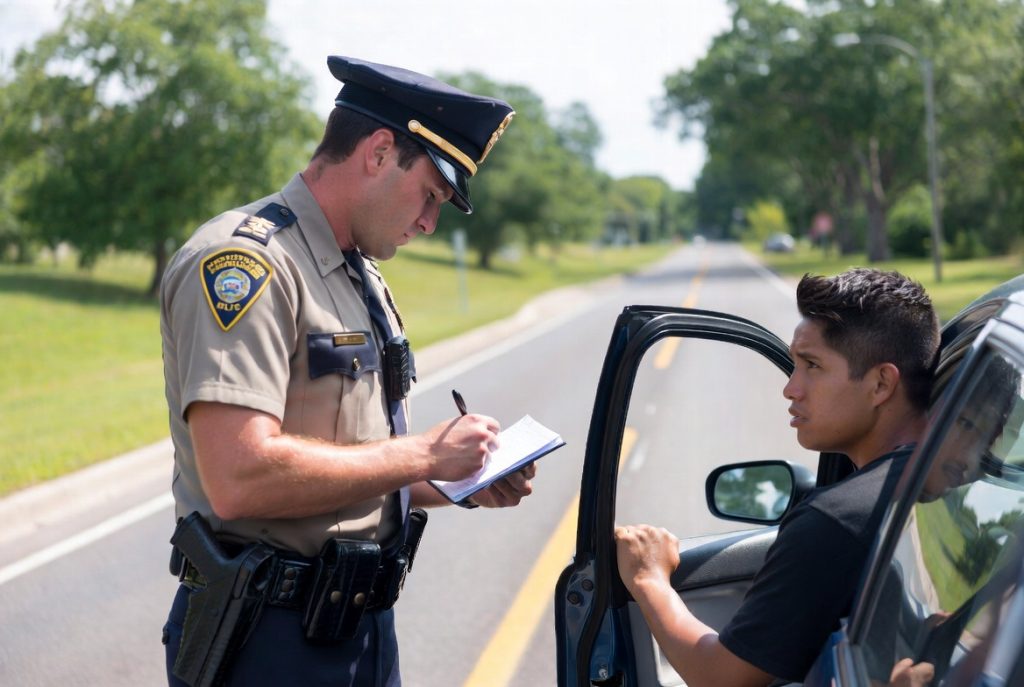
The fine is the smallest piece. The real costs of an uninsured stretch are insurance reinstatement, license effects, and the next two years of premiums. Here’s a complete picture — and a path back.
The Fine and the Impound
Fines for driving without insurance vary by state. The range is wide:
- Low end: Around $100–$200 in some states (like North Dakota or Wisconsin) for a first offense.
- High end: Up to $5,000 or more in states like New Jersey, Michigan, or Virginia. Virginia historically charged a $500 “uninsured motorist fee” just to drive legally without insurance — and eliminated this only recently in favor of stricter enforcement.
- Most states: $500–$1,500 for a first offense, with higher penalties for repeat violations.
Beyond the fine, many states allow (or require) officers to impound your vehicle at the scene. Impound fees run $150–$400 to release the car, plus $30–$75 per day in storage fees if you can’t get it out immediately. That’s before the towing fee.
Some states also issue points on your license for driving uninsured. Points accelerate license suspension timelines and further raise your insurance rate.
License Suspension and Reinstatement
Most states suspend your driver’s license and vehicle registration if you’re caught driving without insurance — or if your insurance lapses and the state’s verification system catches it.
Reinstating your license typically costs:
- Reinstatement fee: $50–$200, depending on the state.
- SR-22 or FR-44 filing: Many states require a financial responsibility filing (SR-22) after an uninsured offense. This form is filed by your insurance carrier and costs $15–$35 per filing. But the bigger cost is that having an SR-22 requirement flags you as high-risk — and that surcharge stays with you for 1–3 years depending on the state.
An SR-22 requirement means you must maintain continuous insurance for the filing period. If your policy lapses during that window, your carrier notifies the state immediately, and your license is suspended again — restarting the clock.
How the Next Policy Gets Priced
The long-term cost is where an uninsured period really adds up. Here’s what happens when you go to buy your next policy:
- Coverage lapse surcharge: Carriers treat a gap in coverage as a risk signal. A lapse of 30+ days typically adds 10–30% to your premium. A lapse of 60+ days can push it higher, and some preferred-tier carriers will decline you entirely.
- SR-22 requirement: If the state requires an SR-22, you’re automatically in the non-standard (high-risk) market for 1–3 years. Non-standard premiums run 20–50% higher than standard market rates.
- The compound effect: Higher base rate + lapse surcharge + SR-22 surcharge = the actual cost. For a driver who might have paid $1,200/year normally, a post-uninsured-period premium might run $1,800–$2,400 for two full years before normalizing.
These surcharges don’t disappear when you get new insurance — they stay until the look-back period passes.
A Clean Comeback Plan
If you’re already on the other side of an uninsured period, here’s how to come back efficiently:
- Get covered immediately. Every additional day without coverage makes the lapse surcharge larger and keeps the clock from starting on your clean record.
- Ask about SR-22 upfront. If you need one, get quotes from carriers who file SR-22s directly — most non-standard market carriers do. Don’t try to hide it; they’ll find out and cancel you.
- Pay on time, every month. During an SR-22 period, a cancellation for non-payment is a disaster. Auto-pay is worth it here.
- Re-shop at 12 months. After a year of clean coverage, you have options again. Some preferred-tier carriers will quote you even with a prior SR-22 period if it’s been 12+ months.
- Re-shop again at 24 months. By this point, many surcharges have reduced or expired. You should be seeing rates that look closer to normal.
Next step: Get covered today — even a basic liability policy stops the lapse clock and keeps your comeback timeline as short as possible. Get a same-day quote that works for your situation →
Last modified: March 7, 2026
About the Author: Casey Rivera