
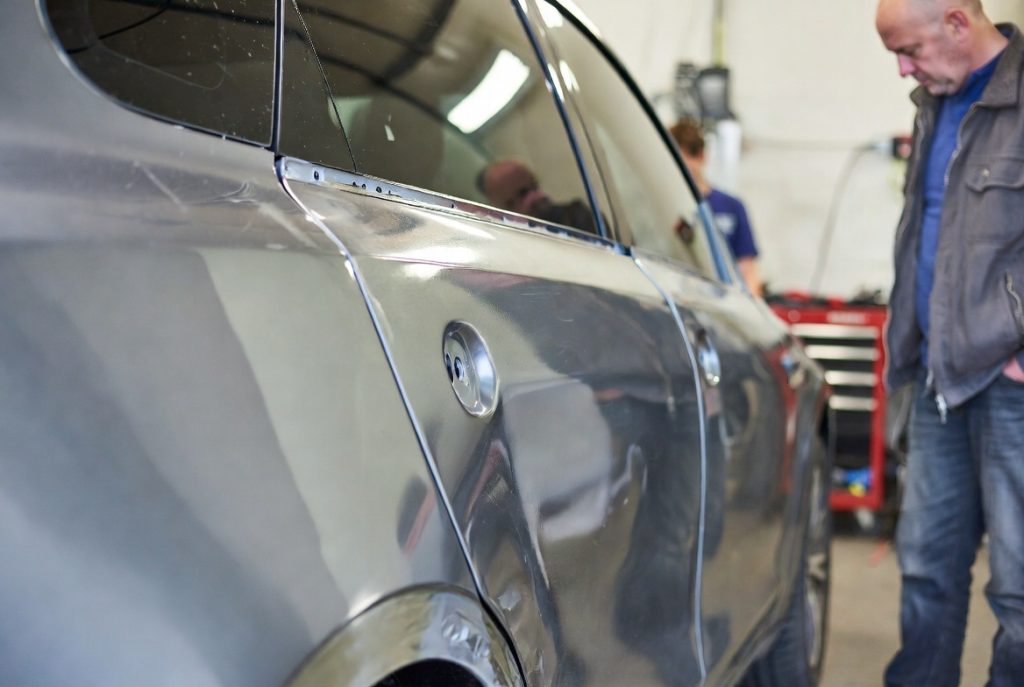
Even a perfect repair lowers your car’s resale value. A diminished-value claim recovers some of that difference — and most drivers never file one. Here’s how it works and when it’s worth pursuing.
What “Diminished Value” Means
Diminished value (DV) is the difference between what your car was worth before an accident and what it’s worth after — even after it’s been fully repaired.
Why does value drop after a perfect repair? Because buyers can see accident history on Carfax and AutoCheck. A repaired vehicle sells for less than a clean one. That loss is real, documented, and in many states, recoverable.
There are three types of diminished value:
- Inherent DV: The automatic stigma of accident history. This is what most claims cover.
- Repair-related DV: Loss from imperfect repairs. Harder to prove, higher payout.
- Immediate DV: Loss before repairs happen. Usually not separately claimable.
Most DV claims are for inherent diminished value — the stigma loss that stays on the car’s history regardless of repair quality.
States Where You Can File
DV claims work best when you’re claiming against the other driver’s liability insurance (called a third-party claim). In that scenario, most states allow it.
Georgia is the most DV-friendly state — courts have upheld DV claims clearly and consistently. Other states where third-party DV claims have strong support include Florida, Illinois, Colorado, and North Carolina.
First-party DV claims — filing against your own carrier — almost never work. Most policies explicitly exclude diminished value. Read your policy before going that route. You’ll usually hit a dead end.
If the accident was 100% the other driver’s fault, file a third-party DV claim against their carrier. That’s your strongest position.
How to Document the Loss
The adjuster won’t calculate DV for you. You need to bring documentation.
The strongest evidence is a professional appraisal from an independent appraiser. These reports typically cost $150–$300 and provide a formal written opinion of your car’s pre- and post-accident value. The appraiser inspects the vehicle, reviews the repair records, and produces a document the carrier must respond to.
You can also support your claim with:
- Carfax or AutoCheck report showing the accident
- Comparable vehicle listings (same make, model, year, mileage) with and without accident history on Autotrader or Cars.com
- Dealer trade-in offers before and after (if you have them)
The appraiser’s report is the most persuasive. Comparable listings are supporting evidence. Together, they build a credible claim.
A Short Claim Script
When you contact the at-fault driver’s carrier, say this:
“I’m also filing a diminished value claim in connection with claim number [X]. My vehicle has sustained inherent diminished value as a result of the accident. I’ve had an independent appraisal done and I’d like to submit it to your adjuster.”
Then email the appraisal and comparable listings. Ask for a written response within 10 business days. If the offer is low, counter with your documented number. If they refuse entirely, file a complaint with your state’s Department of Insurance — carriers in most states are required to consider documented DV claims.
DV settlements typically range from a few hundred dollars to several thousand. On a newer or higher-value vehicle, the appraisal fee pays for itself many times over.
Next step: Search “auto diminished value appraiser” in your city and get a quote for an appraisal report — then check whether the accident was the other driver’s fault before you file. Get a same-day quote that works for your situation →
Last modified: April 4, 2026
About the Author: Casey Rivera