
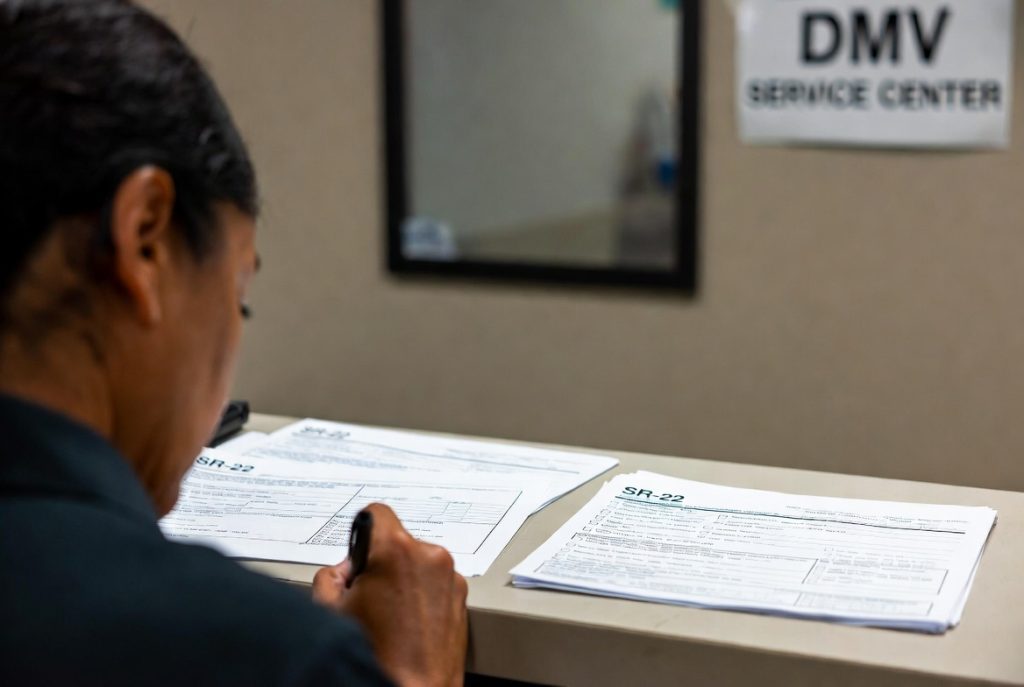
An SR-22 isn’t a type of insurance. It’s a certificate your insurance company files with your state to prove you’re carrying the minimum required coverage — usually after a serious violation like a DUI, reckless driving, or driving uninsured. If your state ordered one, you need it before you can legally drive again. Here’s how to get it today without overpaying.
What an SR-22 Actually Is
An SR-22 is a form — specifically, a Certificate of Financial Responsibility — that your insurer submits electronically to your state’s DMV. It proves you have active coverage. If your policy lapses, your insurer is required to notify the state automatically. That triggers a license suspension.
It does not mean you have a special kind of insurance. You still buy a standard auto policy. The SR-22 is just a filing attached to it, usually costing $15–$50 as a one-time fee depending on the state.
Some states use a different form: the FR-44. Florida and Virginia require it specifically after DUI convictions. The FR-44 works the same way but demands higher liability limits — typically double the state minimum. If you’re in FL or VA after a DUI, ask for FR-44 when you call carriers.
Who Needs One (and for How Long)
You’ll usually need an SR-22 if you were convicted of:
- DUI or DWI
- Reckless driving
- Driving without insurance
- Too many points on your license in a short period
- An at-fault accident while uninsured
The filing window is typically three years, though some states require two or up to five. The clock starts from your conviction date — not when you get the SR-22. Miss a payment and let your policy lapse, and the clock can restart. Three uninterrupted years is the goal.
How to File One Today
Here’s the order of operations:
- Call or apply online with a carrier that handles non-standard drivers. Not every insurer files SR-22s. Ask directly before getting a quote.
- Buy the policy. The SR-22 is attached to an existing policy — you can’t file without one.
- Pay the filing fee. Usually $15–$50, paid once at the start.
- Confirm the filing was received. Ask your insurer for a confirmation number. Some states update the DMV within 24–48 hours; others take up to a week.
- Don’t cancel the policy. Set up autopay. A lapse means the insurer notifies the DMV and your license gets suspended again.
If you don’t currently own a vehicle, you can get a non-owner SR-22 policy. It covers you when you drive other people’s cars and satisfies the filing requirement.
Which Carriers Offer It Cheapest
Rates after a serious violation vary more than standard rates, so shopping multiple carriers matters more here than almost anywhere else. Companies that regularly write non-standard policies include Progressive, The General, Dairyland, Gainsco, and State Auto. Regional carriers sometimes beat national ones — get at least three quotes.
Rates also vary by state. In some states, an SR-22 filing barely moves the needle on premium. In others, you may pay 50–80% more than before. That variance is another reason to shop instead of assuming your current carrier is your cheapest option.
Quick Reference
- SR-22 = a state filing, not a policy type
- FR-44 = used in FL and VA after DUI, with higher limits required
- Filing fee: $15–$50 (one-time, by state)
- Filing window: usually 3 years from conviction date
- Non-owner SR-22 available if you don’t own a car
- Lapse = license suspension + possible clock reset
Next step: Call at least two carriers today and ask specifically, “Do you file SR-22s in my state?” Get quotes from both before choosing. Get a same-day quote that works for your situation →
Last modified: January 4, 2026
About the Author: Casey Rivera