
Some states make police reports easy to get. Others bury the process in fax numbers and in-person windows. Either way, that report quietly becomes the most important piece of paper in your claim — and getting it fast is worth a little effort.
Here is what you need to know to get it, read it, and use it.
Where to Request One (Online vs. In Person)
Most states now offer online report requests. The agency that handled your crash — city police, county sheriff, or state highway patrol — is the one that holds the record. Start there.
Common online portals include:
- LexisNexis Police Reports — used by agencies in dozens of states including Texas, Florida, and Georgia.
- Crashdocs.org — covers California CHP, Colorado State Patrol, and others.
- BuyCrash.com — used by many agencies in the Midwest and Southeast.
- Direct agency websites — larger city departments (NYPD, Chicago PD) run their own portals.
If you can’t find an online option, call the non-emergency line for the responding agency and ask for the Records Division. Some smaller departments still require you to show up in person with a photo ID and a check.
Tip: grab your case or report number at the scene. It speeds up every step after.
Typical Fees and Wait Times
Reports aren’t free, but they’re cheap. Expect to pay between $5 and $25 depending on the agency and state.
Wait times vary:
- 3–5 business days — most large urban agencies with online systems.
- 7–10 business days — medium agencies, or states without automated portals.
- Up to 14 business days — rural departments, paper-heavy workflows.
Your insurer can often pull the report on their own using your claim number and case number. Ask them early whether they need you to provide it or whether they’ll obtain it themselves. Either way, order your own copy. You want to read it before your adjuster does.
How Insurers Use the Report
Adjusters use the police report to answer three questions: Who was there? What happened? Who is at fault?
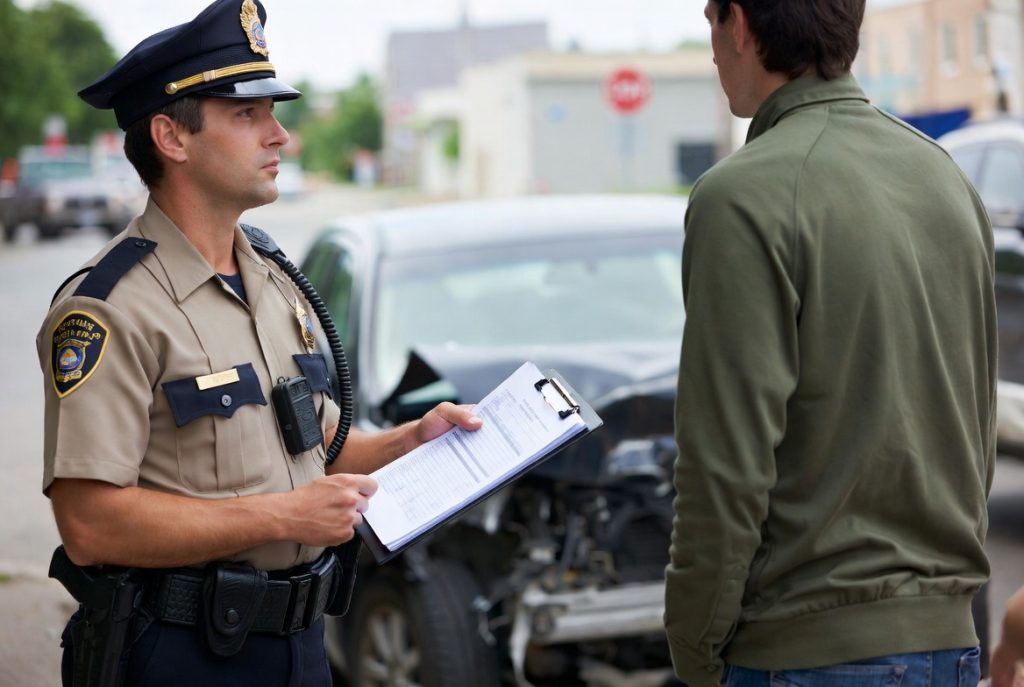
The report documents the officer’s observations — vehicle positions, road conditions, witness names, any citations issued, and sometimes a diagram. It carries more weight than either driver’s account because it’s an independent, time-stamped record.
At-fault determinations often hinge on whether a citation was issued. If the other driver got a ticket, your claim moves faster. If no citations were issued, the report’s narrative section still helps establish what the officer saw.
Insurance companies also use reports to flag inconsistencies. If your statement doesn’t match the report, adjusters notice. Read it before your recorded statement.
When to Amend It
Reports contain errors more often than you’d expect — wrong vehicle color, wrong street address, a misspelled name, or a factual detail that contradicts what you know happened.
If you spot an error, you have the right to request a supplement or amendment. Here’s how:
- Contact the Records Division at the agency that issued the report.
- Submit a written request (some agencies have a form; others accept a letter).
- Include the report number, the specific error, and the correct information along with any supporting evidence (photos, your own statement).
The officer may add a supplemental report rather than change the original. That’s fine — it goes in the same file. What matters is that the correction is on record before your claim closes.
If the at-fault determination is wrong and negotiations stall, you can also file a complaint through the agency’s oversight process, or work with an attorney to present contradicting evidence to the insurer directly.
The report doesn’t control the outcome — it shapes it. A clean, accurate report shortens claims and protects your payout. An uncorrected error can shrink both.
Next step: Order your report today through your state’s online portal or the responding agency’s Records Division. Get a same-day quote that works for your situation →
Last modified: April 19, 2026
About the Author: Casey Rivera